
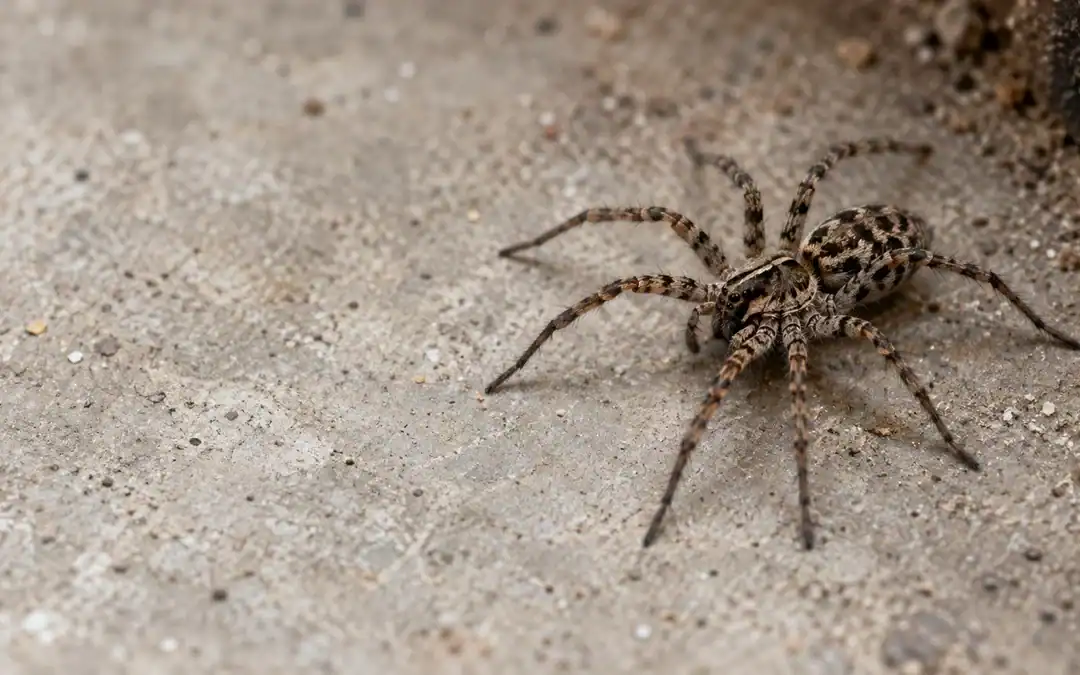
Types of Spiders in North Carolina: Identification Guide
There are dozens of types of spiders in North Carolina, but only two carry medical significance: the black widow and the brown recluse, and the recluse is genuinely rare here. Everything else you find in a Burlington or Raleigh home, from wolf spiders to cellar spiders, is harmless and often beneficial. This guide helps you identify what you’re looking at, understand which spiders matter, and know when a growing spider population signals a bigger pest issue.
Most spiders you’ll encounter in your North Carolina home are not a threat. They eat mosquitoes, flies, and other household pests, quietly doing a job most homeowners never notice. But two species, the black widow and the brown recluse, are venomous enough to warrant real caution. The challenge is telling them apart from the many harmless look-alikes that share the same dark corners, garages, and crawl spaces.
This guide gives you a fast identification table, dedicated sections on the spiders that actually matter, and practical guidance on when a spider sighting means it’s time to call a professional. Whether you’re dealing with a shiny black spider in the garage or an unusually large web across the porch, you’ll find the answer here.
Quick Identification Table: North Carolina Spiders at a Glance
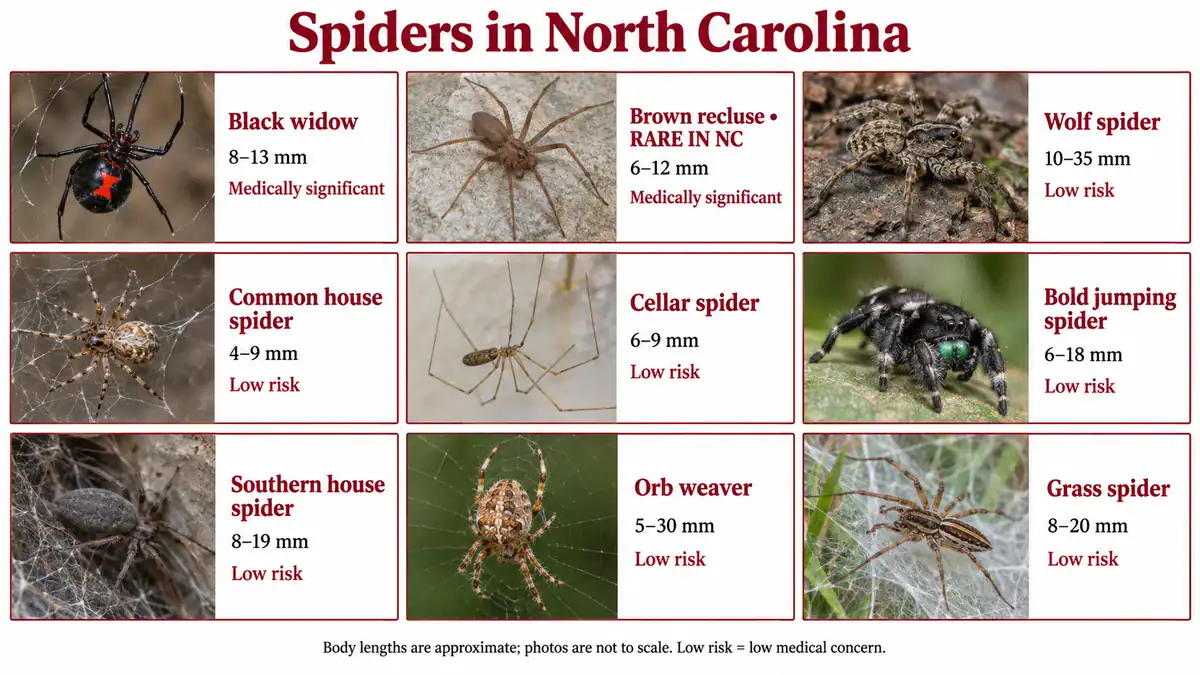
Use this table to match what you’re seeing to a species, then read the full section below for context.
| Common Name | Color/Markings | Size | Web Style | Typical Location | Danger Level |
|---|---|---|---|---|---|
| Black widow | Shiny black body, red hourglass on underside | 0.5 in body | Messy, irregular tangle web | Woodpiles, garages, meter boxes, under rocks | High (venomous) |
| Brown recluse | Light to dark brown, violin-shaped marking on head | 0.25 to 0.5 in | Loose, irregular retreat web | Basements, attics, woodpiles, undisturbed storage | High (venomous), but rare in North Carolina and frequently misidentified |
| Wolf spider | Dark brown with lighter markings on head and abdomen | Up to 2 in | No web; ground hunter | Tall grass, under rocks, floors indoors | Low (bite is harmless) |
| Common house spider | Brown, mottled abdomen | 0.25 to 0.5 in | Cobweb in corners | Ceiling corners, closets, basements | None |
| Cellar spider | Pale tan to light brown, very long thin legs | Up to 1 in | Loose, tangled web | Ceilings, basements, corners indoors and out | None |
| Bold jumping spider | Black with white or iridescent markings, large front eyes | 0.5 to 0.75 in | No web; active hunter | Windowsills, walls, sunny exterior surfaces | None |
| Southern house spider | Dark brown to black, males often mistaken for widows | Up to 1 in | Funnel-shaped retreat web | Eaves, siding, garages | None |
| Orb weaver | Varies widely; often tan, brown, or yellow with patterned abdomen | Up to 1 in body | Large, circular web | Yards, porch eaves, between shrubs | None |
| Grass spider | Brown to gray with two dark stripes on the head | 0.5 to 0.75 in | Funnel-shaped sheet web in grass | Lawns, ground-level shrubs, foundation edges | None |
Black Spiders in North Carolina: What You’re Actually Looking At
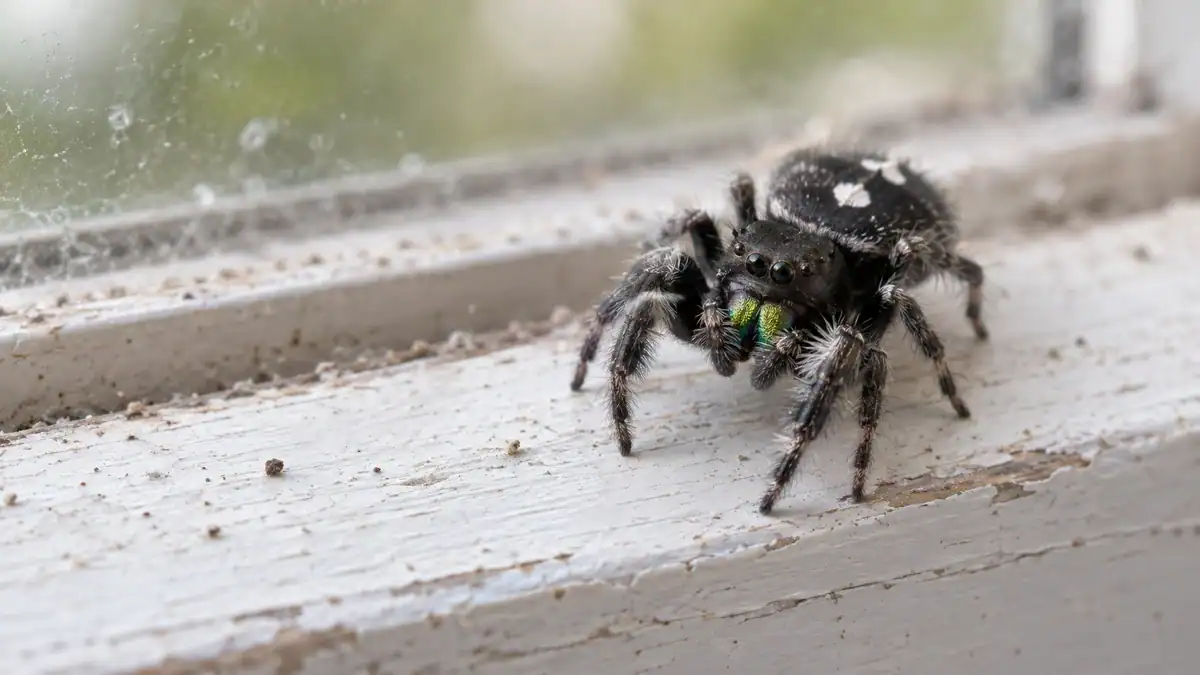
“Black spider in the house” is one of the most common search terms for a reason. Several unrelated species in North Carolina can appear dark or black at a glance, and only one of them is dangerous.
Black widow
The black widow is the species people worry about most, and for good reason. Its shiny, jet-black body and red hourglass marking on the underside of the abdomen make it identifiable once you know what to look for. Widows tend to stay low and hidden, favoring woodpiles, meter boxes, and cluttered garage corners rather than open walls.
Southern house spider
The southern house spider is a frequent case of mistaken identity. Males are dark brown to black and have a build that superficially resembles a widow, but they lack the red hourglass and build funnel-shaped webs along siding and eaves rather than the messy tangle webs widows prefer.
Bold jumping spider
The bold jumping spider is another dark-colored spider that alarms homeowners, mostly due to its size and quick, deliberate movements. It’s black with white or iridescent markings and large front eyes, and it hunts actively rather than sitting in a web. It poses no threat to people.
Cellar spider
Finally, the cellar spider, sometimes called a daddy longlegs, can look dark in dim light due to its long, thin legs and shadowed body, but its coloring is actually pale tan to light brown. It’s one of the most common spiders found indoors in North Carolina and is considered beneficial because it preys on other spiders and insects.
If you’re unsure which of these you’re looking at, the hourglass marking is the detail that matters most. No hourglass generally means no cause for concern.
The Two Venomous Spiders in North Carolina
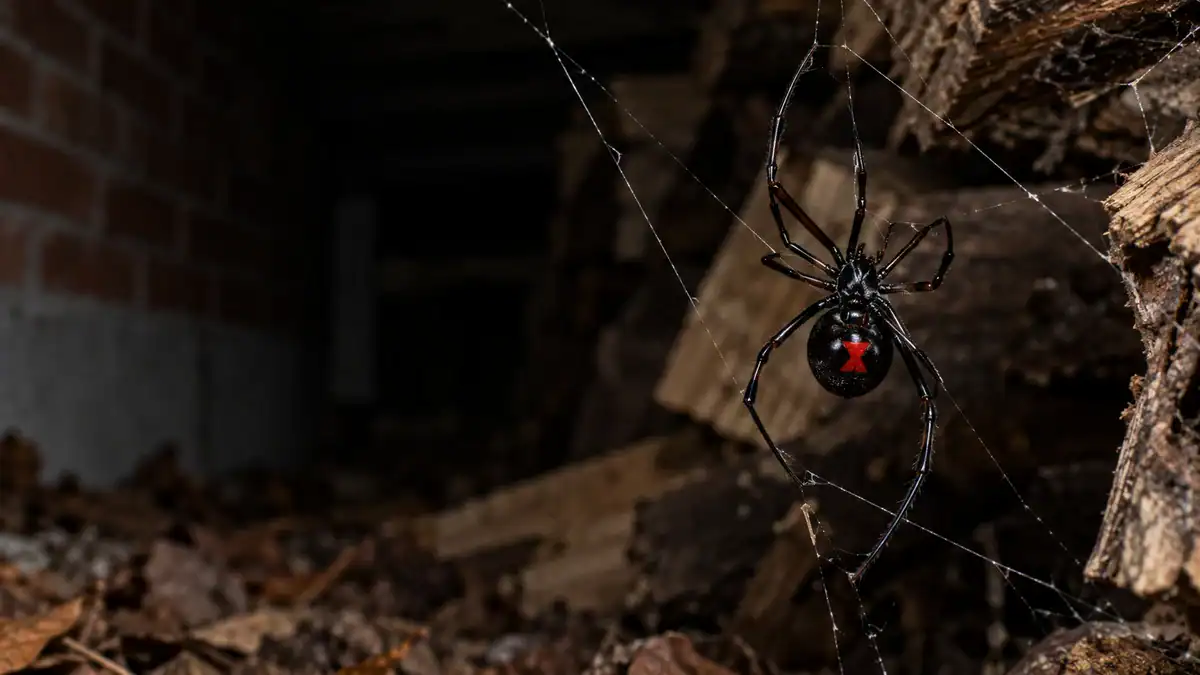
North Carolina’s mild climate supports a wide variety of spider species, but only two are medically significant to people: the black widow and the brown recluse.
Black widow
The black widow has a shiny black body and a red hourglass shape on its underside. It’s typically found in woodpiles, under rocks, and around the exterior of homes, occasionally making its way into garages. Widows aren’t aggressive and bite only when they feel directly threatened, but their venom can cause serious symptoms including muscle pain, cramping, and nausea.
Brown recluse
Start with the part most articles skip: the brown recluse is rare in North Carolina. It is native only to the far western tip of the state and is extremely uncommon everywhere else, including Burlington, Raleigh, and the rest of the Piedmont. The overwhelming majority of suspected recluse sightings turn out to be something else, usually a wolf spider, a grass spider, or a common house spider seen in poor light.
That makes identification the useful skill here rather than alarm. A true recluse is light to dark brown, a quarter to half an inch across the body, with a violin-shaped marking behind the head and uniformly colored legs without banding or stripes. It prefers dimly lit, undisturbed places such as basements, attics, and long-untouched storage boxes, and it builds a loose, irregular retreat web rather than an organized one.
Like the widow, it isn’t aggressive and tends to bite defensively rather than as a first response. A recluse bite can cause a slow-healing wound and, in some cases, more serious complications, so a confirmed bite is worth medical attention. If you believe you have found one in a North Carolina home, photograph it from a safe distance and have it identified before treating anything.
For a deeper look at both species, including additional prevention guidance, see our detailed post on venomous spiders found in North Carolina. If you suspect a bite from either spider, the CDC’s guidance on venomous spider bites outlines symptoms to watch for and when to seek medical care.
The Common Harmless Spiders You’ll Find Indoors
The vast majority of spiders you’ll find inside a North Carolina home fall into this category. They’re not dangerous, and most are actively helping keep other pest populations down.
Wolf spider
Wolf spiders are large, fast-moving, and often mistaken for something more dangerous simply due to their size. They don’t build webs, instead hunting on the ground, which is how they end up under doors and along baseboards. A wolf spider bite is possible if it’s handled roughly, but the effect is mild.
Cellar spider
Cellar spiders build loose, tangled webs in ceiling corners and basements. Despite their unsettling appearance, they’re harmless and help control other insect and spider populations indoors.
Common house spider
Common house spiders are the classic cobweb builders, small and brown with mottled markings. They tend to settle into undisturbed corners and rarely bite.
Jumping spider
Jumping spiders are compact, fuzzy, and easy to recognize by their large front eyes. They hunt actively during the day and are known to pause and seem to watch you before moving on. They pose no threat.
Southern house spider
Southern house spiders build funnel-shaped retreat webs along exterior walls and eaves. Males occasionally wander indoors and are sometimes mistaken for widows, but they lack the telltale red hourglass.
Why Spiders Come Indoors in the Fall
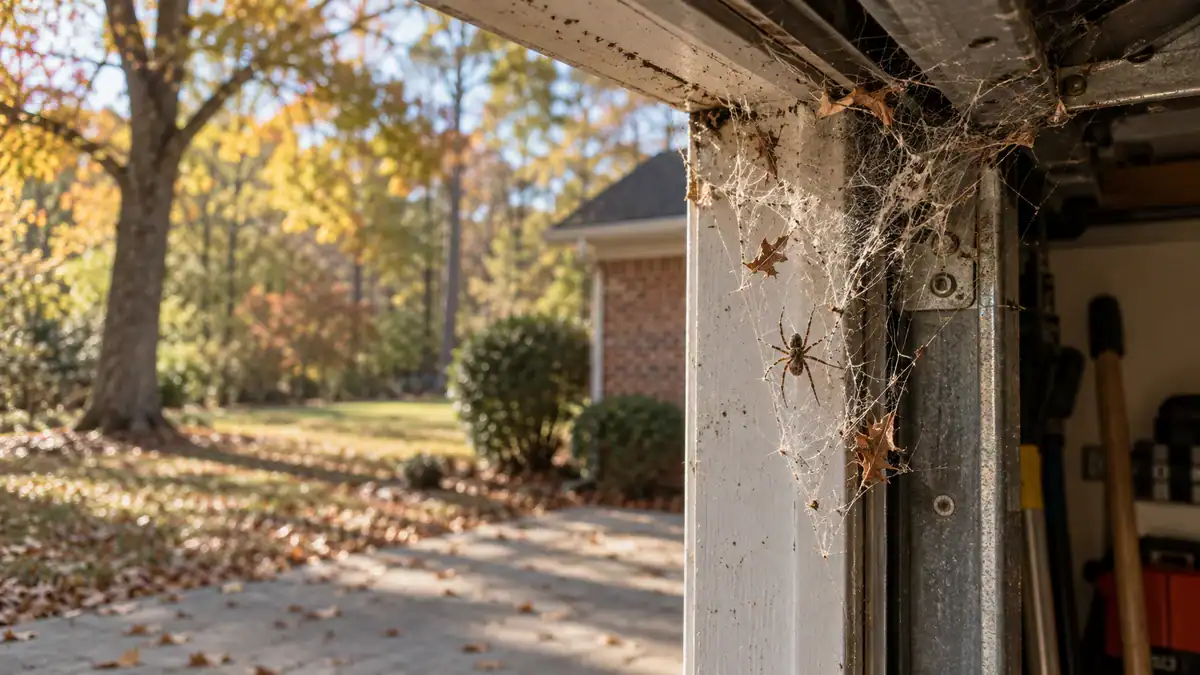
Spider activity in North Carolina homes tends to spike as the weather cools, and the reason almost always comes down to food and shelter.
As temperatures drop, the insects spiders feed on start seeking warmth indoors, and spiders follow. Porch lights and exterior fixtures attract flying insects toward entry points, giving spiders an easy meal right at the doorstep. At the same time, spiders themselves seek out warmer, more sheltered spaces to wait out the colder months.
Common entry points include gaps around door and window frames, torn window screens, unsealed utility line penetrations, and vents. Firewood and potted plants brought inside from the yard can also carry spiders along with them.
A few practical steps make a real difference. Sealing visible gaps around the foundation and utility lines, replacing damaged screens, switching to yellow or motion-activated exterior lighting, and keeping firewood stored away from the home’s exterior all reduce the odds of a fall spider surge.
Spiders in Burlington and Raleigh Homes
Spider pressure isn’t identical across every part of North Carolina, and homeowners in Burlington and Raleigh often notice different patterns depending on local landscaping, humidity, and housing density.
In Burlington, wooded lots and older homes with mature landscaping tend to see more black widow activity in garages, woodpiles, and crawl spaces. Homes bordering wooded areas should pay particular attention to exterior storage and firewood placement.
In Raleigh, denser residential development and more urban landscaping shift the balance toward cellar spiders, common house spiders, and orb weavers, particularly around porch lighting and landscaped entryways. Wolf spider sightings also tend to increase as new construction disturbs natural ground cover nearby.
In both areas, the fall entry surge follows the same seasonal pattern described above, typically becoming noticeable from late September through November. If you’re seeing an uptick in spider activity, our teams offering pest control in Burlington and pest control in Raleigh can assess what’s drawing them in and address it at the source.
When a Spider Problem Needs a Professional
Not every spider sighting requires a call to pest control. But certain signs suggest it’s time to bring in professional support rather than handling it yourself.
Frequent sightings of black widows, especially inside living spaces rather than garages or storage areas, are a clear signal. So is a sudden, sustained increase in overall spider activity, which often points to an underlying insect population that’s feeding them. Large or numerous egg sacs, particularly from widow spiders, are another sign that a colony has established itself rather than a single spider passing through.
Professional spider control in North Carolina typically starts with an inspection to identify species present, locate entry points and harborage areas, and assess the insect activity drawing spiders indoors in the first place. Treatment then targets both the spiders and their food source, since removing spiders without addressing the underlying insect population rarely produces lasting results.
“In this area, the first places I check for widows are woodpiles, garage corners, and window wells. If a customer is seeing them repeatedly indoors rather than just in the garage, that tells me it’s time for a full inspection, not just a spot treatment,”
Tim Rodgers, Region 2 Area Technical Leader
If you’re noticing more spiders than usual or want to rule out venomous species, book a free spider inspection and our team will identify exactly what’s in your home and what it will take to manage it.
Frequently Asked Questions
Are brown recluse spiders found in North Carolina?
Yes, but they are rare. Brown recluse spiders are native only to the far western tip of North Carolina and are extremely uncommon throughout most of the state. Because other spiders are often mistaken for brown recluses, it is helpful to know how to properly identify them and understand their behavior.
What is the big black spider in my house in North Carolina?
It’s most likely a southern house spider, a bold jumping spider, or a wolf spider rather than a black widow. True black widows have a distinct red hourglass marking on the underside of the abdomen. If that marking isn’t present, the spider is almost certainly harmless.
Which spiders in North Carolina are dangerous to people?
Only two species carry medical significance: the black widow and the brown recluse. Every other common North Carolina house spider, including wolf spiders, cellar spiders, and orb weavers, is harmless to people.
Why do I suddenly have more spiders in the fall?
Cooling temperatures push insects toward warmth indoors, and spiders follow their food source. Porch lighting and small gaps around doors, windows, and utility lines make it easy for both insects and spiders to get inside during this seasonal shift.
Do wolf spiders bite?
Wolf spiders can bite if handled or trapped against skin, but the bite is not dangerous and causes only mild, localized discomfort. They don’t build webs and are more likely to be found on the ground or along baseboards than on walls.
How do I keep spiders out of my house?
Seal gaps around doors, windows, and utility line entry points, repair damaged screens, and switch to yellow or motion-activated exterior lighting to attract fewer insects. Keeping firewood and clutter away from the home’s exterior also removes common spider hiding spots. For a lasting solution, professional treatment addresses both spiders and the insect population feeding them.
Seeing More Spiders Than Usual?
A rise in spider activity is often a sign of a larger insect problem rather than an isolated spider issue. Identifying the species is the first step, but resolving it usually means addressing what’s drawing them indoors in the first place.
Not sure what you found? Send Sawyer a photo and a technician will tell you what it is, no visit required. And if you want to get ahead of the season rather than react to it, ask about seasonal exterior treatment before spiders start moving indoors this fall.
Sawyer Exterminating serves homeowners throughout Burlington, Raleigh, and the surrounding areas. Book a free spider inspection and our team will identify what’s in your home and recommend the right plan to manage it.
Prefer to talk to someone? Call 336-226-1448.
About the Author
Tim Rodgers serves as Region 2 Area Technical Leader for Sawyer Exterminating. With extensive field experience and technical expertise, he supports teammates through training, coaching, and problem-solving guidance. Tim is dedicated to helping teams provide effective pest management solutions and extraordinary service for customers throughout the North Carolina Piedmont and surrounding areas.
Reviewed By
Cory Goeltzenleuchter, B.C.E., P.H.E., CP-FS, is the Director of Technical Services for Sawyer Exterminating. As a Board Certified Entomologist and Public Health Entomologist, he is one of the organization’s leading technical experts in pest management. Cory oversees technical training, service standards, and industry best practices, helping ensure that customers receive extraordinary service through science-based solutions, ongoing education, and innovative approaches across the Sawyer Exterminating service area.