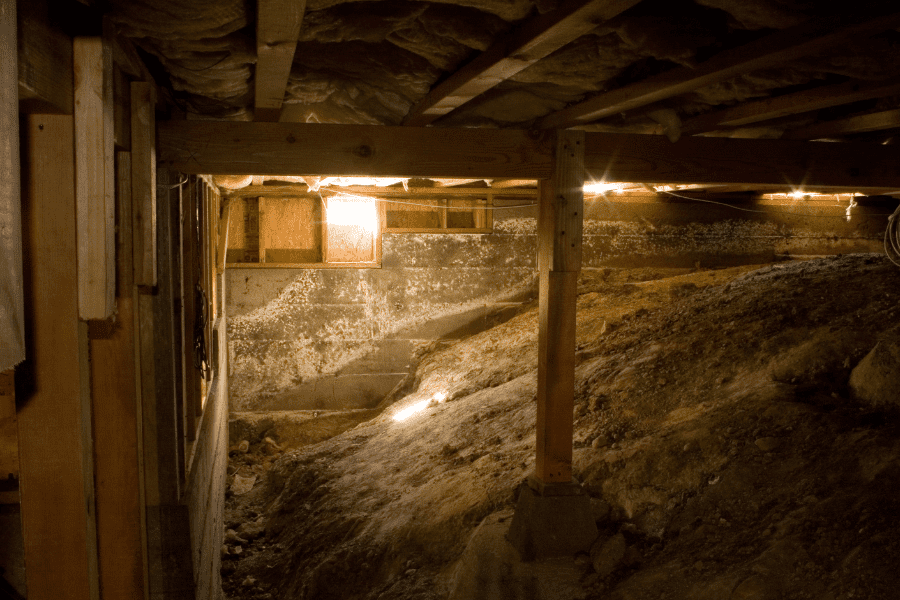
Your crawl space may not be top of mind, but in Burlington, North Carolina, it has a big influence on your home’s comfort, health, and efficiency. If you’ve been noticing musty smells, rising utility costs, or even pest activity, it could be time to take a closer look below your floors. Crawl space encapsulation can protect your home from moisture, mold, and unwanted critters—issues that are all too common in central North Carolina. Let’s break down what encapsulation is, signs your home may need it, and why more Burlington homeowners are making the switch.
Understanding Crawl Space Encapsulation
What Is Encapsulation?
Encapsulation is the process of sealing off your crawl space with a durable vapor barrier. In many cases, it also includes insulation upgrades and the addition of a dehumidifier. By controlling moisture at the source, encapsulation helps stop problems such as:
Because Burlington often experiences muggy conditions, encapsulation helps keep indoor air fresher, while also making your house more energy-efficient.
Why Burlington Homeowners Benefit from Encapsulation
Choosing crawl space encapsulation comes with a wide range of advantages, including:
Cleaner, Healthier Air
Much of the air you breathe indoors originates from the crawl space. Sealing it reduces allergens, mold spores, and that “old basement” smell.
Better Moisture Management
Encapsulation keeps damp outdoor air out, protecting your floors, wood beams, and other structural elements from water damage and warping.
Energy Savings
Less moisture and improved insulation allow your HVAC system to run more efficiently. That translates into lower energy bills and steadier indoor temperatures.
Fewer Pest Problems
Rodents, insects, and termites thrive in damp environments. Encapsulation makes your crawl space less welcoming to pests by eliminating both entry points and excess moisture.
Long-Term Protection
Encapsulation safeguards your investment and may increase resale value by making your home healthier, drier, and more efficient.
Signs It’s Time to Check Your Crawl Space
Homes in Burlington often show warning signs when crawl space issues are present. Keep an eye out for:
Persistent odors: Musty or earthy smells can indicate mold or mildew below.
Moisture indoors: Condensation on windows or sticky indoor air may come from your crawl space.
Visible growth: Mold on baseboards, corners, or walls often starts from below.
Unwanted pests: Evidence of rodents or insects can signal a crawl space problem.
Sagging floors: Excess moisture can weaken wood supports and damage flooring.
What the Encapsulation Process Involves
When you choose professional encapsulation, here’s what to expect:
Inspection and preparation Your crawl space is assessed for pests, mold, or structural concerns, and debris is removed.
Sealing with a vapor barrier A thick liner is applied to the floors and walls, and vents or openings are sealed.
Moisture control Depending on conditions, a dehumidifier or sump pump may be installed to regulate humidity.
Final check The crawl space is inspected to ensure it’s fully sealed and performing as it should.
Long-Term Payoff for Burlington Homes
With encapsulation, Burlington homeowners often see lasting improvements, such as:
Fewer repairs caused by moisture or pests
Greater comfort throughout the seasons
Peace of mind that your home is protected from below
Is Crawl Space Encapsulation Right for You?
If you’re dealing with humidity, unpleasant odors, or pest activity—or if you just want to avoid those problems in the future—crawl space encapsulation may be the solution. It’s a proactive step that protects your home, makes your air cleaner, and prevents costly repairs down the road.
Ready to take control of your crawl space? Contact Sawyer Exterminating today to schedule an inspection and request your personalized encapsulation estimate.
By Tim Rodgers, Region 2 Area Technical Leader · Last updated: September 2026
Reviewed for accuracy by Cory Goeltzenleuchter, B.C.E., P.H.E., CP-FS, Director of Technical Services, September 2026
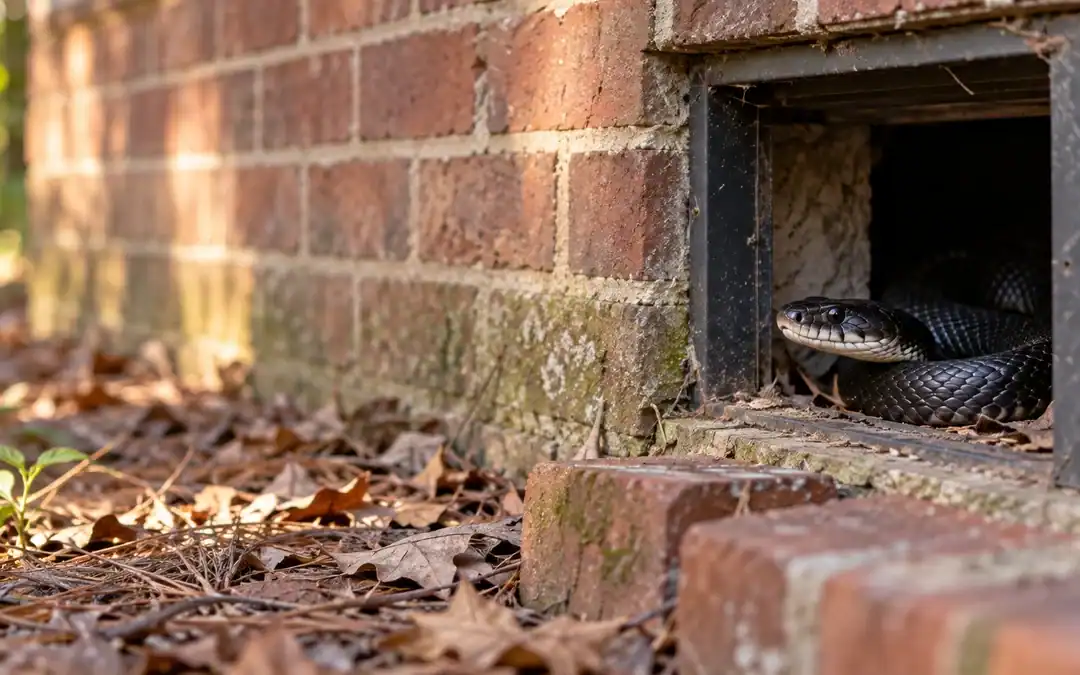
Snakes get under your house because a North Carolina crawl space checks every box: a steady food supply of rodents, consistent temperature, and dark, undisturbed cover. Most get in through gaps as small as a quarter inch around foundation vents, plumbing penetrations, and door frames. A torn vent screen or a settling foundation crack is enough. Sealing those entry points, eliminating the rodent food source, and controlling moisture are the three steps that keep them out for good.
Finding a snake under your house is unsettling no matter how many times you’ve heard that most North Carolina species are harmless. The scratching sound in the crawl space, the shed skin near the vent screen, the sudden movement caught out of the corner of your eye while checking on a leaky pipe: these moments tend to stay with homeowners. And in the Piedmont, where fall temperature drops send snakes searching for warmer shelter, crawl spaces are one of the most common places they end up.
This guide covers why snakes target crawl spaces in Burlington and Raleigh homes, how they get in, which species you’re most likely to encounter, and the exclusion-first process that keeps them out for good. Whether you’re dealing with an active sighting or trying to get ahead of the fall season, you’ll find a clear plan of action here.
What’s Actually Under Your House: Snakes and Why They’re There
If you’ve spotted a snake near your foundation, heard something moving under the floor, or noticed a shed skin near a vent, there’s a reason it chose your home. North Carolina crawl spaces give snakes everything they need: warmth, shelter, and a steady food source. Understanding what’s drawing them in is the fastest way to stop it.
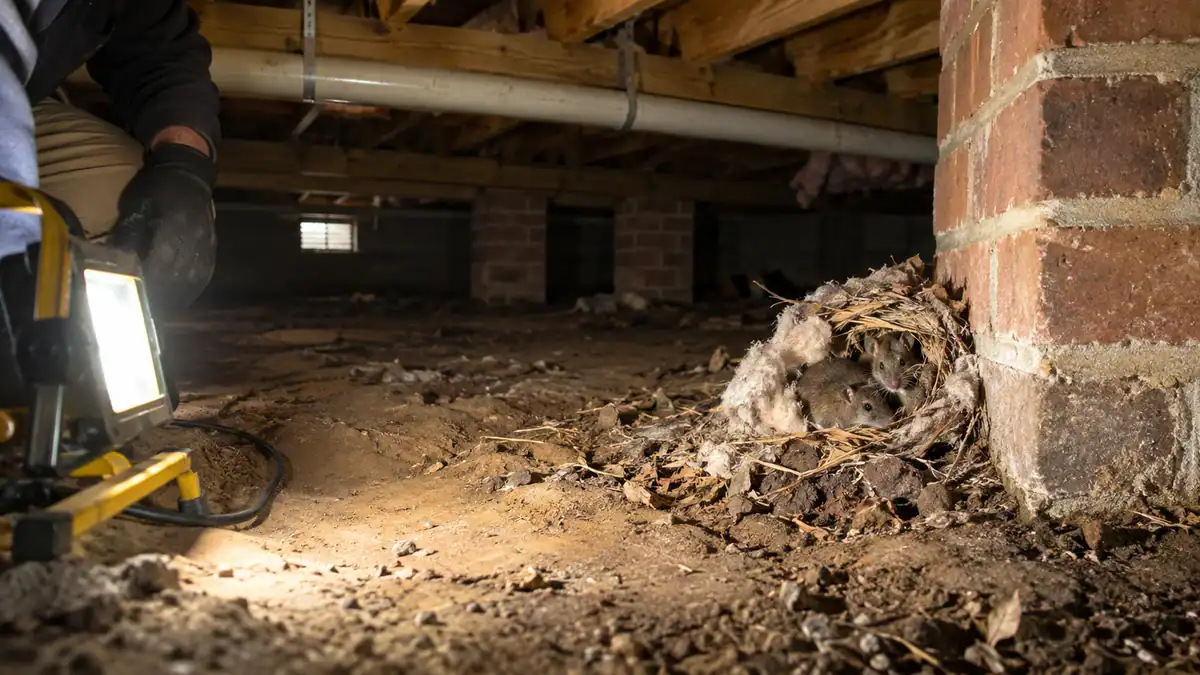
Rodent activity is the primary driver. Snakes follow food more than they seek shelter on its own terms. A crawl space with mice or rats is, from a snake’s perspective, a stocked pantry. If you’ve noticed rodent droppings, gnaw marks, or nesting material during a crawl space visit, assume snakes have taken notice too.
Moisture, standing water, and damp insulation make a crawl space more hospitable. Many North Carolina snake species are drawn to humid, cool environments, and a poorly ventilated or improperly vapor-barriered crawl space holds onto that moisture far longer than it should.
Clutter, stored boxes, firewood, and heavy ground cover create exactly the kind of undisturbed hiding spots snakes prefer. A crawl space used for storage, or a yard with firewood stacked against the foundation, gives snakes cover they wouldn’t otherwise have.
Loose or missing vent screens, unsealed utility penetrations, and warped crawl space doors are the physical entry points that turn nearby attraction into active occupancy.
How Snakes Get In: The Entry Points Most Homeowners Miss
Most homeowners assume their crawl space is sealed until they’re actually at ground level looking for gaps. These are the entry points Sawyer’s service professionals find most often on crawl-space snake calls.
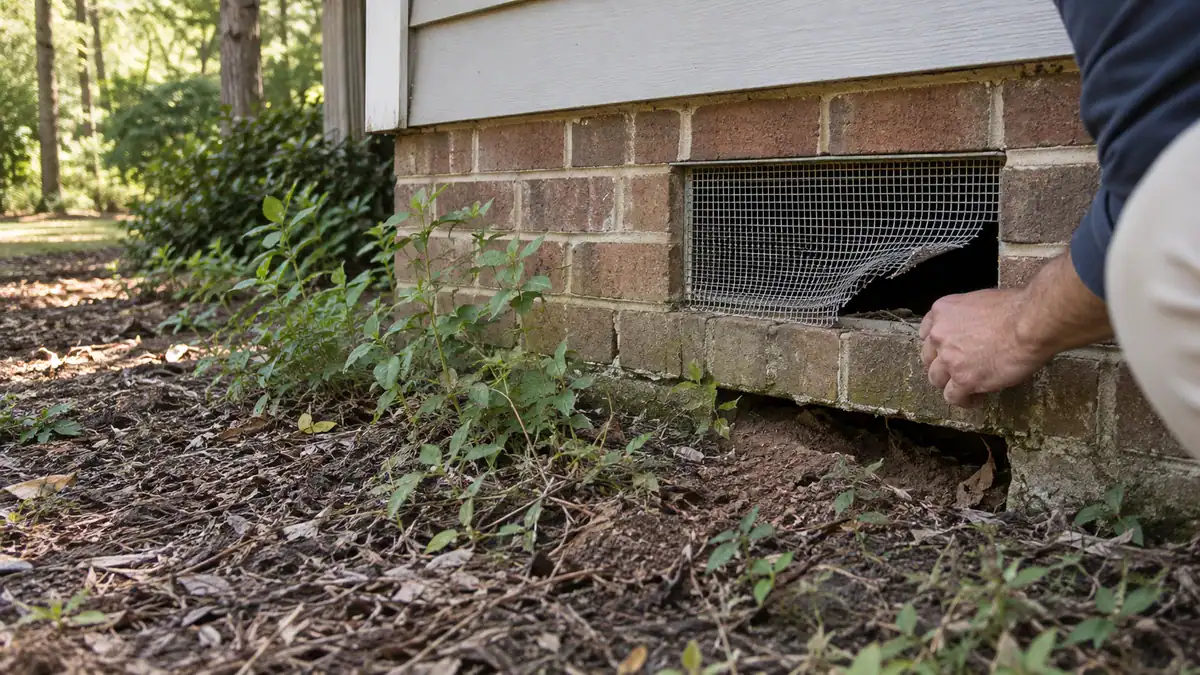
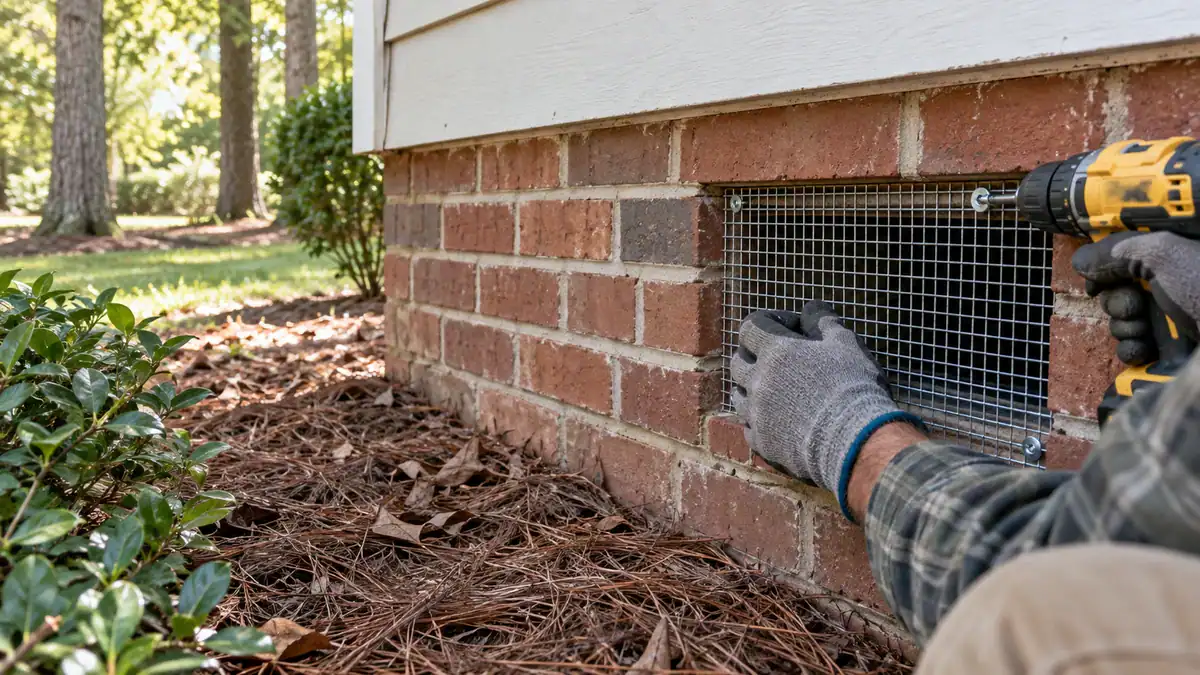
Foundation vents with rusted or torn screening are one of the most common access points, especially on older homes where the original screening has degraded over years of weather exposure.
Gaps around plumbing, HVAC line sets, and electrical conduit are frequently left unsealed after installation or repair work. These penetrations often pass directly into the crawl space interior.
Crawl space access doors that no longer seat flush are an easy oversight. Wood doors warp, hinges sag, and what was once a tight seal becomes a gap wide enough for a snake to push through.
Settling cracks in block foundations and siding-to-sill-plate gaps develop gradually as a home ages. In older Burlington homes, these cracks can widen enough over time to create entry points that weren’t there when the house was built.
Snakes Under a House in North Carolina: What You’re Likely Dealing With
Most snakes found under North Carolina homes are non-venomous and pose no direct threat to people. That said, correctly identifying what you’re looking at matters, both for your peace of mind and for determining the right next step.
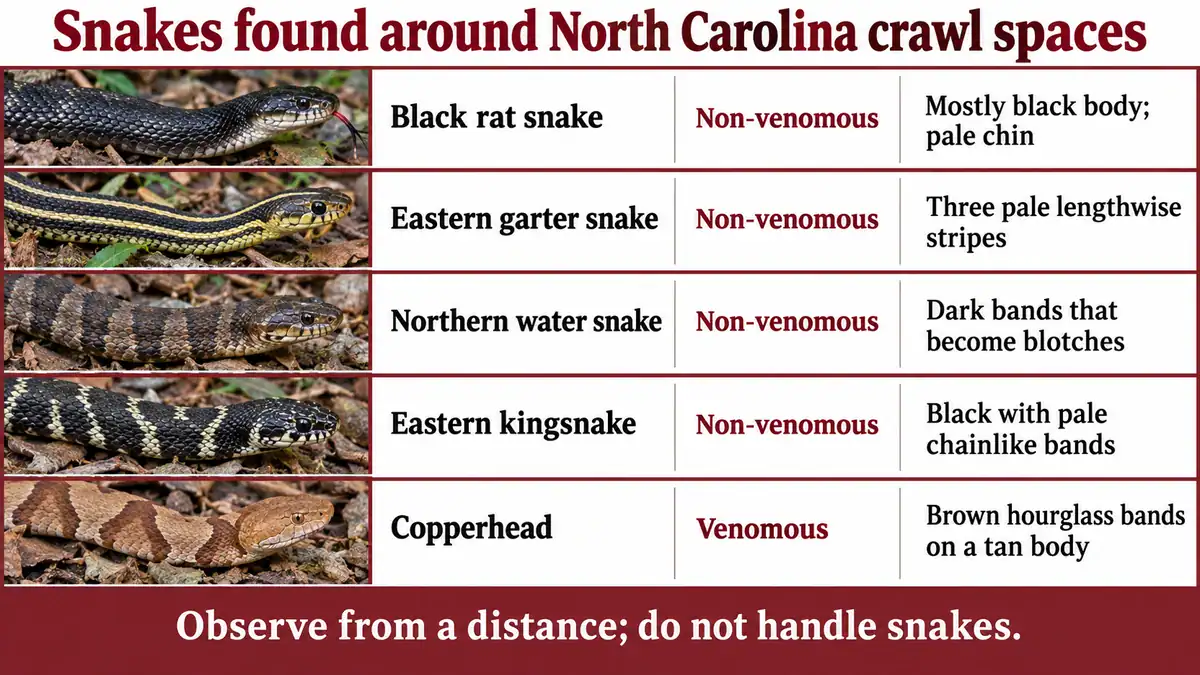
Non-venomous species commonly found under Piedmont homes include the eastern garter snake, rat snakes, and black snakes (often black racers or black rat snakes). These species are typically longer and more slender than copperheads, with smooth, uniform, or striped patterning rather than the hourglass-shaped bands copperheads display.
Copperheads are the venomous species homeowners are most likely to encounter in a North Carolina crawl space. They have a distinctive coppery-brown head and a body marked with hourglass or saddle-shaped bands that are darker at the edges and lighter in the center. Several harmless species have blotchy patterns that get mistaken for a copperhead at a glance, so look closely. Copperheads tend to be shorter and thicker-bodied than rat snakes or garter snakes, rarely exceeding three feet in length. If you are not certain of the species, do not attempt removal.
Species
Typical Size
Markings
Venomous
What to Do
Copperhead
2 to 3 ft
Coppery head, hourglass-shaped bands darker at edges
Yes
Keep distance, do not attempt removal, call Sawyer
Eastern garter snake
1.5 to 3 ft
Three light stripes running the length of a dark body
No
Can typically be left alone or safely relocated
Rat snake
3 to 6 ft
Black, gray, or yellow with blotched or striped pattern
No
Beneficial rodent predator; safe to relocate
Black racer
3 to 5 ft
Solid glossy black, smooth scales
No
Fast-moving, generally harmless; safe to relocate
Most of what turns up under a Piedmont house is a non-venomous rodent hunter, and the copperhead is the one species that changes how you should respond. For species-by-species identification beyond the common crawl-space snakes, NC State Extension’s guide to North Carolina snakes covers the full range found across the state.
Is There a Snake Nest Under My House?
Snakes do not build nests the way rodents do, so a crawl space rarely holds anything that looks like one. What homeowners usually mean by a snake nest is one of two things: a clutch of eggs laid in loose soil, damp insulation, or a pile of stored material, or several snakes sheltering in the same protected spot as temperatures drop. Both are worth taking seriously, because both mean the conditions under the house are good enough to hold snakes rather than just funnel one through.
Signs point the same direction either way. Multiple shed skins in the same area, sightings weeks apart in the same corner, or eggs found while moving stored boxes all suggest the space is being used rather than passed through. Snake nest removal in that situation is not a matter of pulling out one animal. It means clearing the site, finding the entry point, and taking away the rodent activity and moisture that made the spot attractive, which is exactly what exclusion work does.
How to Get a Snake Out of Your Crawl Space Safely
Once you’ve confirmed a snake is present, the process for removing it should prioritize safety over speed. Trying to catch, trap, or spray a snake directly is rarely effective and increases the risk of a defensive bite, particularly with copperheads.
Identify the species from a safe distance. Use the comparison table above or a photo taken from several feet away to determine whether you’re dealing with a venomous or non-venomous snake.
Close off interior access points. Seal any gaps between the crawl space and living areas of the home to prevent the snake from moving further inside.
Locate and open a single exit path. If the snake is confirmed non-venomous and accessible, giving it a clear path back outside is often more effective than trying to physically remove it.
Avoid glue boards and DIY sprays. Glue boards can injure a snake without fully containing it, and most over-the-counter repellent sprays have limited, inconsistent effectiveness against snakes already inside a structure.
Call Sawyer for venomous species or repeat sightings. Copperheads should always be handled by a trained Sawyer professional. A single non-venomous sighting may resolve on its own, but repeated sightings point to an active entry point that needs to be found and sealed.
Schedule an inspection to identify the entry point. Removing one snake without finding how it got in only delays the next sighting.
For homeowners who would rather not handle any part of this process directly, professional snake removal in North Carolina covers inspection, safe removal, and entry point identification in a single visit.
How to Keep Snakes Out of Your Crawl Space for Good
Removing a single snake solves the immediate problem. Keeping snakes out long-term requires removing the conditions that attracted one in the first place. Sealing entry points alone is not enough if rodents are still active inside.
Exclusion work should come first. This means sealing foundation gaps and cracks, re-screening vents with durable steel mesh rather than standard fiberglass screening, and replacing or repairing crawl space doors that no longer close flush.
Removing the food source matters just as much as sealing. A crawl space free of entry gaps but full of rodents will still draw snake attention from the yard. A rodent control program that removes the food source addresses the root cause rather than just the symptom.
Moisture control reduces the overall appeal of the crawl space environment. A properly installed vapor barrier, functional drainage away from the foundation, and dehumidification where needed all make the space less hospitable for snakes and the pests they follow. For a closer look, see our guide on crawl space moisture and maintenance.
Yard-side changes round out an exclusion plan. Trimming ground cover away from the foundation, relocating firewood stacks several feet from the home’s exterior, and keeping mulch depth modest near the sill all reduce the cover snakes use to approach a home undetected.
Snake Season in Burlington and Raleigh: When to Act
North Carolina’s Piedmont region sees a predictable pattern each fall. As sustained daytime temperatures begin to drop, snakes increase their movement in search of warm, sheltered places to overwinter. Crawl spaces are an obvious candidate, particularly in neighborhoods with older housing stock or active rodent pressure.
The two markets Sawyer serves see this play out somewhat differently. Burlington homes tend to be older, with block foundations and vented crawl spaces that have had decades to develop small cracks and gaps. In established Alamance County neighborhoods, overhanging vegetation and mature landscaping close to the foundation create additional cover and staging ground for snakes. Raleigh’s newer subdivisions present a different challenge: grading and moisture conditions around new construction often attract rodents first, and the snakes follow. Around the greater Triangle area, landscaped entryways and dense ground cover near foundations contribute to fall activity as temperatures cool.
In both areas, the window to act is before the first sustained cold snap. Once snakes have settled into a crawl space for the season, they’re harder to detect and more likely to stay put until spring. Schedule exclusion and rodent work while temperatures are still mild through Sawyer’s pest control in Burlington and pest control in Raleigh teams.
“In this area, the crawl spaces I check first are the ones with an old vent screen that’s already torn or a door that doesn’t sit flush anymore. If a homeowner tells me they’ve seen the same snake twice, that almost always means there’s an entry point we haven’t found yet,”
Tim Rodgers, Region 2 Area Technical Leader
Frequently Asked Questions
Why do I have snakes in my crawl space?
Snakes move into crawl spaces because these areas offer rodents as a food source, stable temperatures, and dark, undisturbed cover. If your crawl space has moisture issues, clutter, or unsealed entry points, it becomes an easy target once a snake is active nearby.
How do I know if a snake is still under my house?
Look for shed skin, snake tracks in dust or loose dirt, and droppings that resemble bird waste with a musky odor. If you haven’t seen fresh signs in several weeks and have sealed known entry points, the snake has likely moved on.
Are snakes in a North Carolina crawl space dangerous?
Most species found under Piedmont homes, including garter snakes, rat snakes, and black racers, are non-venomous and pose little risk. The copperhead is the exception, and it should always be handled by a trained professional rather than approached directly.
Will sealing my crawl space trap a snake inside?
Yes, if a snake is still present when you seal the entry points, it can become trapped inside. Confirm the snake has exited, or schedule professional removal with Sawyer first, before completing any final sealing work.
When do snakes move into North Carolina crawl spaces?
Snake activity in crawl spaces typically peaks from late September through November across the Piedmont. As overnight temperatures begin to drop, snakes that have been living outdoors move toward shelter. Burlington and Raleigh homeowners should schedule inspections and exclusion work before the first sustained cold snap to get ahead of the fall move-in.
Do snake repellents actually work?
Most over-the-counter repellent sprays and granules show limited and inconsistent results once a snake is already established in a crawl space. Exclusion work, rodent control, and moisture management produce far more reliable long-term results than repellent products alone.
Found a Snake? Here’s Your Next Step
A snake in the crawl space is rarely a one-time event if the underlying conditions that drew it in are still there. Identifying the entry point, removing the food source, and controlling moisture are what actually keep snakes from returning season after season.
Found a snake under your house in Burlington or Raleigh? Sawyer Exterminating’s technicians handle identification, safe removal, and the exclusion work that stops it from happening again.
Tim Rodgers serves as Region 2 Area Technical Leader, supporting Sawyer Exterminating and the broader service network with field expertise, technical training, and hands-on coaching. With extensive experience in pest management, Tim helps technicians deliver consistent, science-based service and extraordinary care for customers throughout Burlington, Raleigh, and the surrounding North Carolina Piedmont.
Reviewed By
Cory Goeltzenleuchter, B.C.E., P.H.E., CP-FS, is a Board Certified Entomologist and Public Health Entomologist who serves as Director of Technical Services, overseeing technical training, service standards, and industry best practices across the service area. His review helps ensure every piece of pest education content reflects current, science-based pest management guidance.
If you’re dealing with pests in your crawl space in North Carolina, it’s important to address the issue promptly, as pests in this area can cause significant damage to your home and affect indoor air quality. Common pests found in crawl spaces in North Carolina include moisture-loving insects like termites, ants, rodents, spiders, and cockroaches. Here’s a general guide to pest control in your crawl space:
Pest Control In Your Crawl Space
1. Inspection and Identification
Identify the pest: Before you can treat the problem, it’s important to identify what kind of pests you’re dealing with. Common signs include droppings, chewed wires or insulation, or the presence of pests themselves.
Check for moisture: Many pests, especially termites, ants, and cockroaches, thrive in damp environments. If there’s excess moisture or standing water in the crawl space, it can attract pests.
Inspect for entry points: Look for cracks, gaps in the foundation, vents, or places where pipes or wires enter your crawl space that could allow pests to get in.
2. Moisture Control
Encapsulate your crawl space: Installing a vapor barrier or encapsulation system can help control moisture and reduce the risk of attracting pests. The barrier seals the ground and walls of the crawl space, keeping humidity levels in check.
Ensure proper drainage: Make sure the grading around your home slopes away from the foundation, so that water doesn’t pool around or under your crawl space.
Install a dehumidifier: If your crawl space is prone to moisture, a dehumidifier can help maintain an optimal environment, reducing the likelihood of pests like termites and mold.
3. Sealing Entry Points
Seal gaps and cracks: Use caulk, foam, or mesh to seal cracks in the foundation, around pipes, vents, and around doors to the crawl space.
Install pest-proof vents: Make sure any vents in your crawl space are equipped with mesh screens to prevent rodents and insects from entering.
4. Pest Treatment
Termite prevention: In North Carolina, termites can be a major problem. If you suspect a termite infestation, it’s essential to get a professional pest control service to inspect your property and recommend treatments. Termite treatments may include bait stations, liquid barrier treatments, or fumigation in severe cases.
Rodent control: For rodents, trapping, sealing entry points, and keeping food sources like pet food or trash away from your home can help. You may need a professional pest control company to address large infestations.
Ant control: Baiting and spraying insecticide around entry points can help control ants. However, if you’re dealing with carpenter ants or other wood-destroying ants, it’s best to have a professional inspect and treat the problem.
5. Ongoing Prevention
Regular inspections: Even after the pests are gone, it’s important to inspect your crawl space regularly to catch any new issues early.
Continual moisture management: Keep monitoring moisture levels in your crawl space, especially during the rainy season.
By addressing moisture, sealing potential entry points, and using targeted pest control treatments, you can maintain a pest-free crawl space. If you’re ready to enclose your crawl space or suspect you have pests, reach out to your local pest control company for help with pest control in your crawl space.
Crawl space encapsulation is the process of sealing your crawl space with a barrier to prevent moisture from entering. A crawl space professional will install a moisture or vapor barrier on the floor and walls of the space, allowing moisture to stay out to prevent fungi growth and other moisture–related problems. But when do you know it’s time to enclose your crawl space? We breakdown all you need to know about crawl space encapsulation, its benefits, and tips on keeping it healthy year-round.
FAQs About Crawl Space Encapsulation
When Should I Enclose My Crawl Space?
If you’re noticing persistent moisture issues, fungi growth, or a musty smell creeping into your home, it’s a clear sign that enclosing your crawl space could be the solution. Sealing it off can help protect your home from these issues.
What Are the Benefits to Crawl Space Encapsulation?
Besides preventing moisture-related issues, there are several other benefits that enclosing your crawl space will provide your home, including:
Energy Savings: HVAC units often run longer to help maintain the temperature inside, using more electricity, and, in return, increasing your energy bills. A moisture barrier will act as a sealant and ease your HVAC system to make your home more energy efficient and save money!
Structural Integrity: Home foundations are vital and excess moisture can lead to wood rot, comprising the structural integrity of your home. Moisture barriers help reduce the amount of moisture to avoid wood rot, protecting the overall structure.
Better Air Quality: Fungi and mildew issues can arise if your crawlspace is in bad condition, creating a health risk to your family and pets. Once installed, a moisture barrier looks to reduce the moisture levels and prevent these moisture-related problems from forming, creating better air quality overall.
Pest Control: Unsealed crawlspaces can be an open invitation for pests and wildlife critters to enter and search for a place to nest and find food sources. Pests like rodents and roaches can cause considerable damage and contaminate your home, bringing in health and safety concerns. Enclosing your crawlspace will eliminate entry points for pests into your home and serve as a good starting point for home pest control.
How Can I Keep a Healthy Crawl Space?
Once your crawl space encapsulation is installed, it’s still important to continue taking care of the space so you don’t run into any further problems in the future. Consider these tips:
Continue checking for signs of moisture, including any dampness and standing water.
Install screens over vents or openings in your crawl space to prevent pests from entering.
Remove debris or clutter you see in the space to help eliminate pest harborage sites.
Consider pairing your crawlspace encapsulation services with CrawlSpace Seal, an innovative solution that is applied to beams and floor joists to help prevent pests and moisture problems.
Schedule regular inspections with a pest control company near you to ensure your crawl space is free of pests and other problems.
With the help of crawl space encapsulation, crawlspace seal services, and regular maintenance and inspections, you’ll see a healthier environment in your home!
Once the winter hits North Carolina, the last thing you want to deal with is a cold home! With temperatures dropping, it’s important that your heating systems are ready, and your home is prepared to weather the cold. If not, you could be dealing with cold air and high energy bills. Crawl space enclosure in the winter provides a solution to both problems that many homeowners face.
North Carolina Crawl Space Enclosure Benefits
There are several benefits to enclosing your crawlspace. One that many look forward to is saving on their energy bill. The moisture in your crawlspace can affect the temperature inside the home, causing the HVAC unit or furnace to run longer to help keep your home warm, and in return uses more electricity. When you enclose your crawlspace, the moisture barrier acts as a sealant, which controls the moisture levels. This will ease the strain of your HVAC system to make your home more energy-efficient and save on energy bills.
Another great benefit of enclosing your crawlspace is preventing mold growth and odor. If left open, high moisture levels can cause unwanted growth, creating considerable damage to your home, posing a health risk to your family, and potentially causing an odor throughout your home.
An unsealed crawlspace is an open invitation to pests looking for shelter, food, and water. Once inside, these pests can cause damage and present a health risk to your home and family. After the crawlspace enclosure installation is complete, the moisture barrier can help eliminate entry points for these pests to infest, providing you with another avenue of pest control.
Consider calling a pest control company near you for a crawlspace enclosure inspection and quote to stay warm and pest-free in the winter!
Musty smell upstairs, cold floors, a power bill creeping up — or you just want it sealed before winter. Either way it starts with a look under the house.
Humidity down, fungus and wood rot stopped
Vents sealed, seams taped, heavy-duty vapor liner
Save up to 18% on your utility bills
🏠Locally operated · Serving Alamance County and the surrounding Raleigh, NC area
Free crawlspace inspection. Tell us what you’re seeing and we’ll take a look under the house.