
Why Snakes Love Your North Carolina Crawl Space and How to Keep Them Out
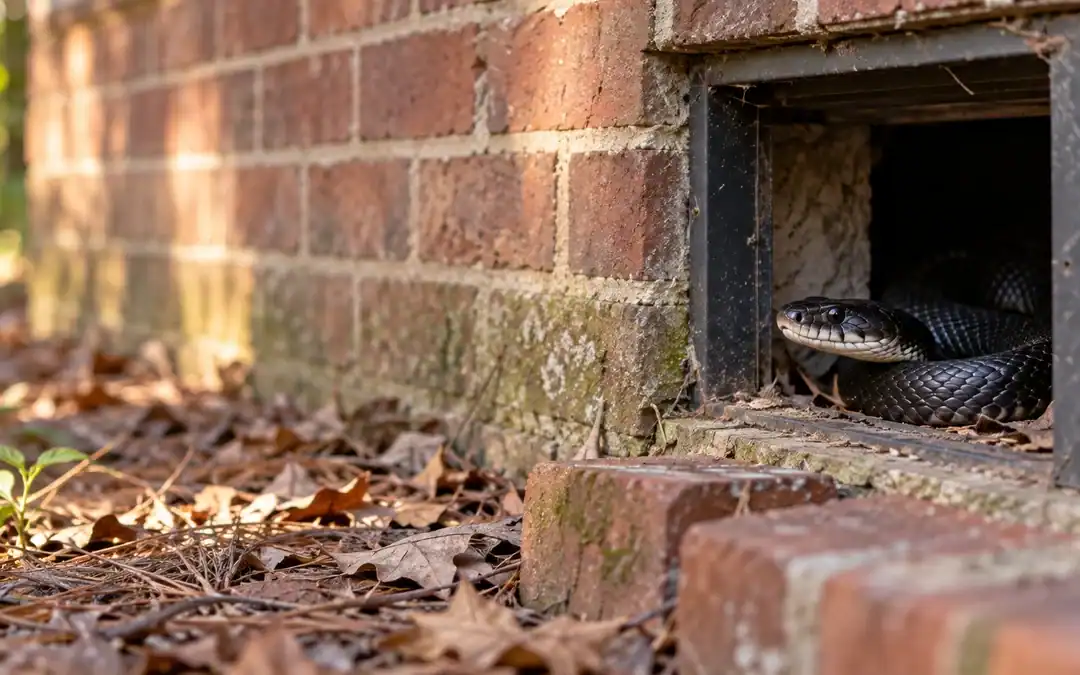
Snakes get under your house because a North Carolina crawl space checks every box: a steady food supply of rodents, consistent temperature, and dark, undisturbed cover. Most get in through gaps as small as a quarter inch around foundation vents, plumbing penetrations, and door frames. A torn vent screen or a settling foundation crack is enough. Sealing those entry points, eliminating the rodent food source, and controlling moisture are the three steps that keep them out for good.
Finding a snake under your house is unsettling no matter how many times you’ve heard that most North Carolina species are harmless. The scratching sound in the crawl space, the shed skin near the vent screen, the sudden movement caught out of the corner of your eye while checking on a leaky pipe: these moments tend to stay with homeowners. And in the Piedmont, where fall temperature drops send snakes searching for warmer shelter, crawl spaces are one of the most common places they end up.
This guide covers why snakes target crawl spaces in Burlington and Raleigh homes, how they get in, which species you’re most likely to encounter, and the exclusion-first process that keeps them out for good. Whether you’re dealing with an active sighting or trying to get ahead of the fall season, you’ll find a clear plan of action here.
What’s Actually Under Your House: Snakes and Why They’re There
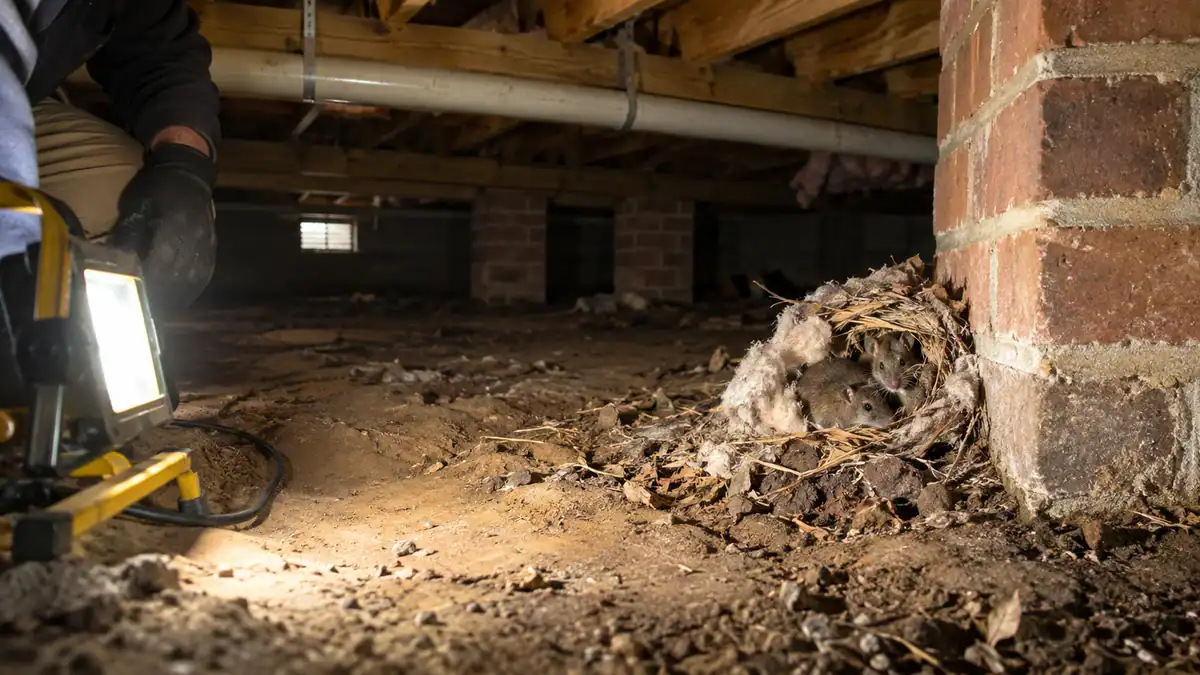
If you’ve spotted a snake near your foundation, heard something moving under the floor, or noticed a shed skin near a vent, there’s a reason it chose your home. North Carolina crawl spaces give snakes everything they need: warmth, shelter, and a steady food source. Understanding what’s drawing them in is the fastest way to stop it.
Rodent activity is the primary driver. Snakes follow food more than they seek shelter on its own terms. A crawl space with mice or rats is, from a snake’s perspective, a stocked pantry. If you’ve noticed rodent droppings, gnaw marks, or nesting material during a crawl space visit, assume snakes have taken notice too.
Moisture, standing water, and damp insulation make a crawl space more hospitable. Many North Carolina snake species are drawn to humid, cool environments, and a poorly ventilated or improperly vapor-barriered crawl space holds onto that moisture far longer than it should.
Clutter, stored boxes, firewood, and heavy ground cover create exactly the kind of undisturbed hiding spots snakes prefer. A crawl space used for storage, or a yard with firewood stacked against the foundation, gives snakes cover they wouldn’t otherwise have.
Loose or missing vent screens, unsealed utility penetrations, and warped crawl space doors are the physical entry points that turn nearby attraction into active occupancy.
How Snakes Get In: The Entry Points Most Homeowners Miss
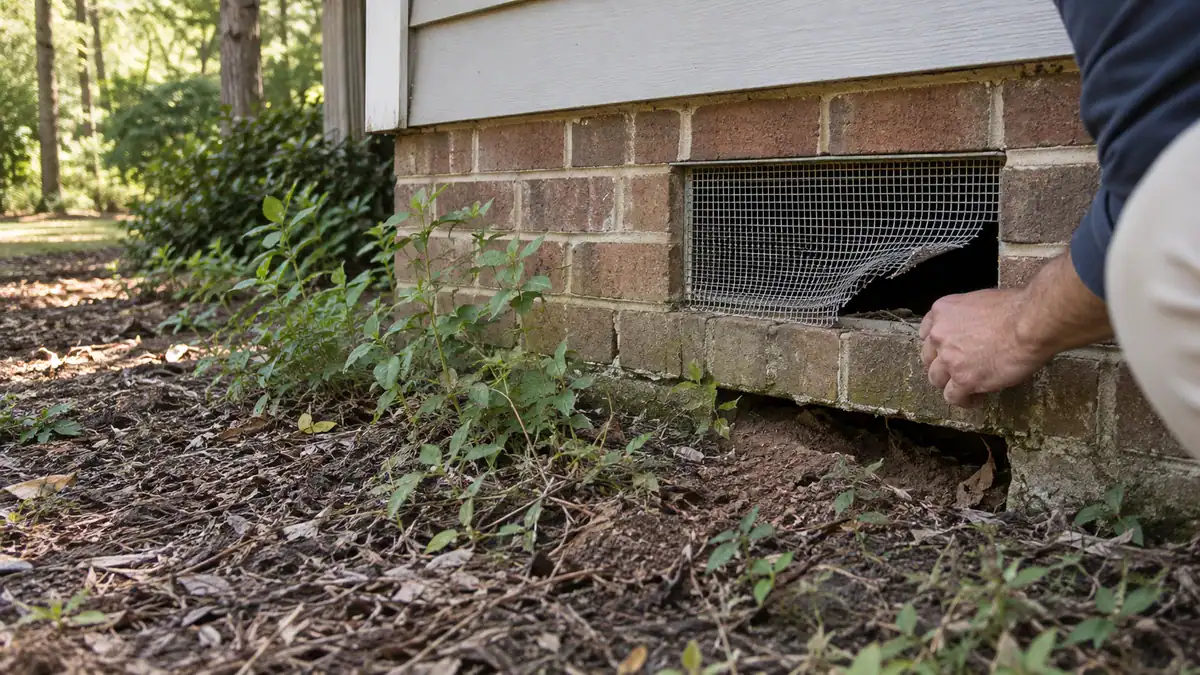
Most homeowners assume their crawl space is sealed until they’re actually at ground level looking for gaps. These are the entry points Sawyer’s service professionals find most often on crawl-space snake calls.
Foundation vents with rusted or torn screening are one of the most common access points, especially on older homes where the original screening has degraded over years of weather exposure.
Gaps around plumbing, HVAC line sets, and electrical conduit are frequently left unsealed after installation or repair work. These penetrations often pass directly into the crawl space interior.
Crawl space access doors that no longer seat flush are an easy oversight. Wood doors warp, hinges sag, and what was once a tight seal becomes a gap wide enough for a snake to push through.
Settling cracks in block foundations and siding-to-sill-plate gaps develop gradually as a home ages. In older Burlington homes, these cracks can widen enough over time to create entry points that weren’t there when the house was built.
Snakes Under a House in North Carolina: What You’re Likely Dealing With
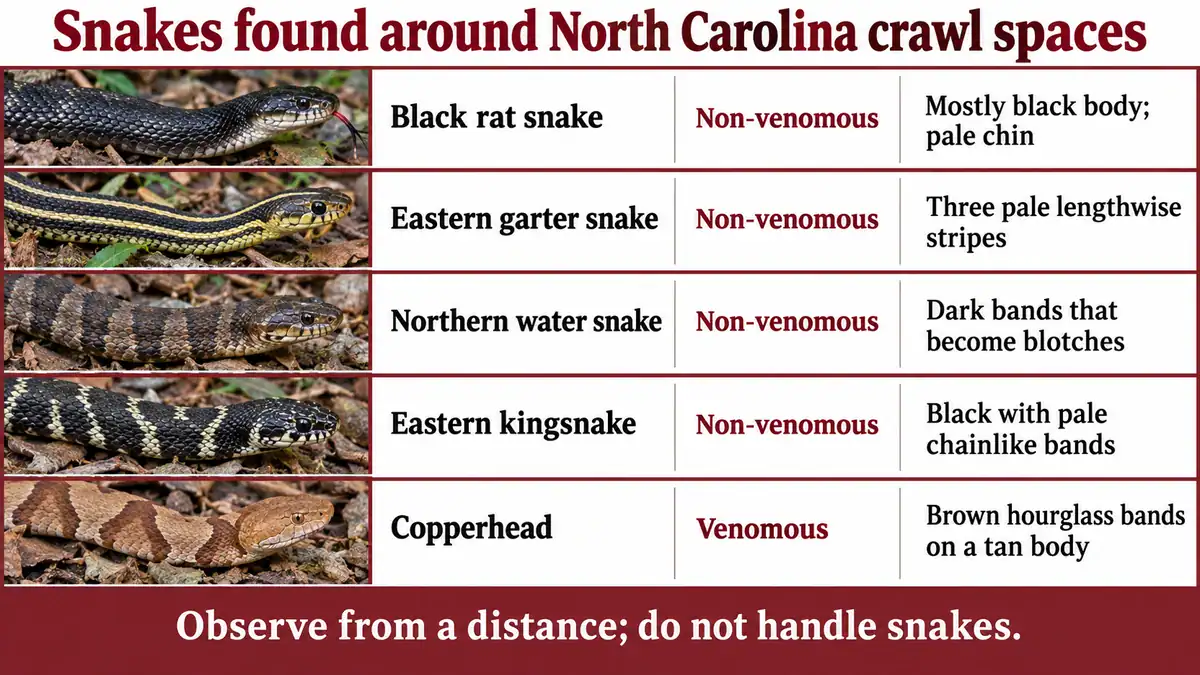
Most snakes found under North Carolina homes are non-venomous and pose no direct threat to people. That said, correctly identifying what you’re looking at matters, both for your peace of mind and for determining the right next step.
Non-venomous species commonly found under Piedmont homes include the eastern garter snake, rat snakes, and black snakes (often black racers or black rat snakes). These species are typically longer and more slender than copperheads, with smooth, uniform, or striped patterning rather than the hourglass-shaped bands copperheads display.
Copperheads are the venomous species homeowners are most likely to encounter in a North Carolina crawl space. They have a distinctive coppery-brown head and a body marked with hourglass or saddle-shaped bands that are darker at the edges and lighter in the center. Several harmless species have blotchy patterns that get mistaken for a copperhead at a glance, so look closely. Copperheads tend to be shorter and thicker-bodied than rat snakes or garter snakes, rarely exceeding three feet in length. If you are not certain of the species, do not attempt removal.
| Species | Typical Size | Markings | Venomous | What to Do |
|---|---|---|---|---|
| Copperhead | 2 to 3 ft | Coppery head, hourglass-shaped bands darker at edges | Yes | Keep distance, do not attempt removal, call Sawyer |
| Eastern garter snake | 1.5 to 3 ft | Three light stripes running the length of a dark body | No | Can typically be left alone or safely relocated |
| Rat snake | 3 to 6 ft | Black, gray, or yellow with blotched or striped pattern | No | Beneficial rodent predator; safe to relocate |
| Black racer | 3 to 5 ft | Solid glossy black, smooth scales | No | Fast-moving, generally harmless; safe to relocate |
Most of what turns up under a Piedmont house is a non-venomous rodent hunter, and the copperhead is the one species that changes how you should respond. For species-by-species identification beyond the common crawl-space snakes, NC State Extension’s guide to North Carolina snakes covers the full range found across the state.
Is There a Snake Nest Under My House?
Snakes do not build nests the way rodents do, so a crawl space rarely holds anything that looks like one. What homeowners usually mean by a snake nest is one of two things: a clutch of eggs laid in loose soil, damp insulation, or a pile of stored material, or several snakes sheltering in the same protected spot as temperatures drop. Both are worth taking seriously, because both mean the conditions under the house are good enough to hold snakes rather than just funnel one through.
Signs point the same direction either way. Multiple shed skins in the same area, sightings weeks apart in the same corner, or eggs found while moving stored boxes all suggest the space is being used rather than passed through. Snake nest removal in that situation is not a matter of pulling out one animal. It means clearing the site, finding the entry point, and taking away the rodent activity and moisture that made the spot attractive, which is exactly what exclusion work does.
How to Get a Snake Out of Your Crawl Space Safely
Once you’ve confirmed a snake is present, the process for removing it should prioritize safety over speed. Trying to catch, trap, or spray a snake directly is rarely effective and increases the risk of a defensive bite, particularly with copperheads.
- Identify the species from a safe distance. Use the comparison table above or a photo taken from several feet away to determine whether you’re dealing with a venomous or non-venomous snake.
- Close off interior access points. Seal any gaps between the crawl space and living areas of the home to prevent the snake from moving further inside.
- Locate and open a single exit path. If the snake is confirmed non-venomous and accessible, giving it a clear path back outside is often more effective than trying to physically remove it.
- Avoid glue boards and DIY sprays. Glue boards can injure a snake without fully containing it, and most over-the-counter repellent sprays have limited, inconsistent effectiveness against snakes already inside a structure.
- Call Sawyer for venomous species or repeat sightings. Copperheads should always be handled by a trained Sawyer professional. A single non-venomous sighting may resolve on its own, but repeated sightings point to an active entry point that needs to be found and sealed.
- Schedule an inspection to identify the entry point. Removing one snake without finding how it got in only delays the next sighting.
For homeowners who would rather not handle any part of this process directly, professional snake removal in North Carolina covers inspection, safe removal, and entry point identification in a single visit.
How to Keep Snakes Out of Your Crawl Space for Good
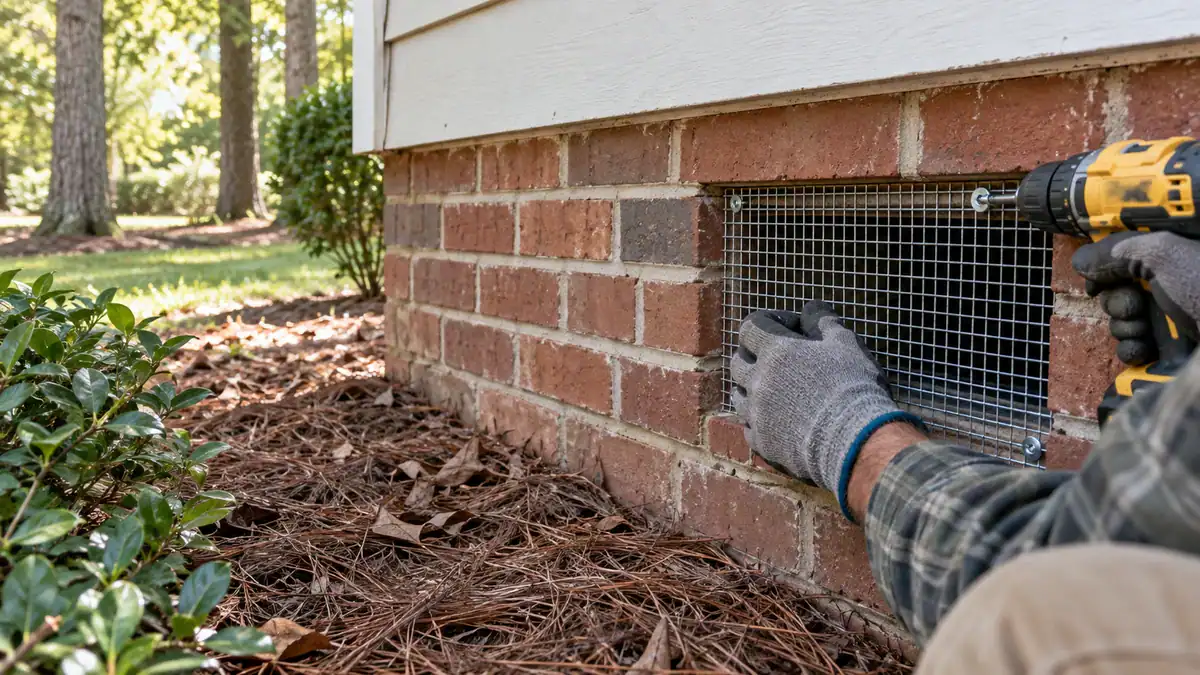
Removing a single snake solves the immediate problem. Keeping snakes out long-term requires removing the conditions that attracted one in the first place. Sealing entry points alone is not enough if rodents are still active inside.
Exclusion work should come first. This means sealing foundation gaps and cracks, re-screening vents with durable steel mesh rather than standard fiberglass screening, and replacing or repairing crawl space doors that no longer close flush.
Removing the food source matters just as much as sealing. A crawl space free of entry gaps but full of rodents will still draw snake attention from the yard. A rodent control program that removes the food source addresses the root cause rather than just the symptom.
Moisture control reduces the overall appeal of the crawl space environment. A properly installed vapor barrier, functional drainage away from the foundation, and dehumidification where needed all make the space less hospitable for snakes and the pests they follow. For a closer look, see our guide on crawl space moisture and maintenance.
Yard-side changes round out an exclusion plan. Trimming ground cover away from the foundation, relocating firewood stacks several feet from the home’s exterior, and keeping mulch depth modest near the sill all reduce the cover snakes use to approach a home undetected.
Snake Season in Burlington and Raleigh: When to Act
North Carolina’s Piedmont region sees a predictable pattern each fall. As sustained daytime temperatures begin to drop, snakes increase their movement in search of warm, sheltered places to overwinter. Crawl spaces are an obvious candidate, particularly in neighborhoods with older housing stock or active rodent pressure.
The two markets Sawyer serves see this play out somewhat differently. Burlington homes tend to be older, with block foundations and vented crawl spaces that have had decades to develop small cracks and gaps. In established Alamance County neighborhoods, overhanging vegetation and mature landscaping close to the foundation create additional cover and staging ground for snakes. Raleigh’s newer subdivisions present a different challenge: grading and moisture conditions around new construction often attract rodents first, and the snakes follow. Around the greater Triangle area, landscaped entryways and dense ground cover near foundations contribute to fall activity as temperatures cool.
In both areas, the window to act is before the first sustained cold snap. Once snakes have settled into a crawl space for the season, they’re harder to detect and more likely to stay put until spring. Schedule exclusion and rodent work while temperatures are still mild through Sawyer’s pest control in Burlington and pest control in Raleigh teams.
“In this area, the crawl spaces I check first are the ones with an old vent screen that’s already torn or a door that doesn’t sit flush anymore. If a homeowner tells me they’ve seen the same snake twice, that almost always means there’s an entry point we haven’t found yet,”
Tim Rodgers, Region 2 Area Technical Leader
Frequently Asked Questions
Why do I have snakes in my crawl space?
Snakes move into crawl spaces because these areas offer rodents as a food source, stable temperatures, and dark, undisturbed cover. If your crawl space has moisture issues, clutter, or unsealed entry points, it becomes an easy target once a snake is active nearby.
How do I know if a snake is still under my house?
Look for shed skin, snake tracks in dust or loose dirt, and droppings that resemble bird waste with a musky odor. If you haven’t seen fresh signs in several weeks and have sealed known entry points, the snake has likely moved on.
Are snakes in a North Carolina crawl space dangerous?
Most species found under Piedmont homes, including garter snakes, rat snakes, and black racers, are non-venomous and pose little risk. The copperhead is the exception, and it should always be handled by a trained professional rather than approached directly.
Will sealing my crawl space trap a snake inside?
Yes, if a snake is still present when you seal the entry points, it can become trapped inside. Confirm the snake has exited, or schedule professional removal with Sawyer first, before completing any final sealing work.
When do snakes move into North Carolina crawl spaces?
Snake activity in crawl spaces typically peaks from late September through November across the Piedmont. As overnight temperatures begin to drop, snakes that have been living outdoors move toward shelter. Burlington and Raleigh homeowners should schedule inspections and exclusion work before the first sustained cold snap to get ahead of the fall move-in.
Do snake repellents actually work?
Most over-the-counter repellent sprays and granules show limited and inconsistent results once a snake is already established in a crawl space. Exclusion work, rodent control, and moisture management produce far more reliable long-term results than repellent products alone.
Found a Snake? Here’s Your Next Step
A snake in the crawl space is rarely a one-time event if the underlying conditions that drew it in are still there. Identifying the entry point, removing the food source, and controlling moisture are what actually keep snakes from returning season after season.
Found a snake under your house in Burlington or Raleigh? Sawyer Exterminating’s technicians handle identification, safe removal, and the exclusion work that stops it from happening again.
Request a free crawl-space inspection or call Sawyer Exterminating to talk through snake removal and crawl-space exclusion.
Prefer to talk to someone? Call 336-226-1448.
About the Author
Tim Rodgers serves as Region 2 Area Technical Leader, supporting Sawyer Exterminating and the broader service network with field expertise, technical training, and hands-on coaching. With extensive experience in pest management, Tim helps technicians deliver consistent, science-based service and extraordinary care for customers throughout Burlington, Raleigh, and the surrounding North Carolina Piedmont.
Reviewed By
Cory Goeltzenleuchter, B.C.E., P.H.E., CP-FS, is a Board Certified Entomologist and Public Health Entomologist who serves as Director of Technical Services, overseeing technical training, service standards, and industry best practices across the service area. His review helps ensure every piece of pest education content reflects current, science-based pest management guidance.