
Does Crawl Space Encapsulation Work? An Honest Answer
Quick answer: Yes, crawl space encapsulation works when it is done right. A properly sealed, drained, and dehumidified crawl space controls moisture and humidity. It also makes the space less inviting to pests and can reduce some energy loss. It does not work when standing water, poor drainage, or structural problems are left in place. Cost depends on the size and condition of the crawl space, access, moisture issues, and any repairs or drainage work needed. A project-specific estimate requires an inspection.
Many homes in Burlington and across the Piedmont sit over crawl spaces. Encapsulation can help manage moisture and comfort, but it is a significant investment and is not the right first step for every home. This guide explains what encapsulation can do, where its limits are, and what affects cost.
What is crawl space encapsulation?
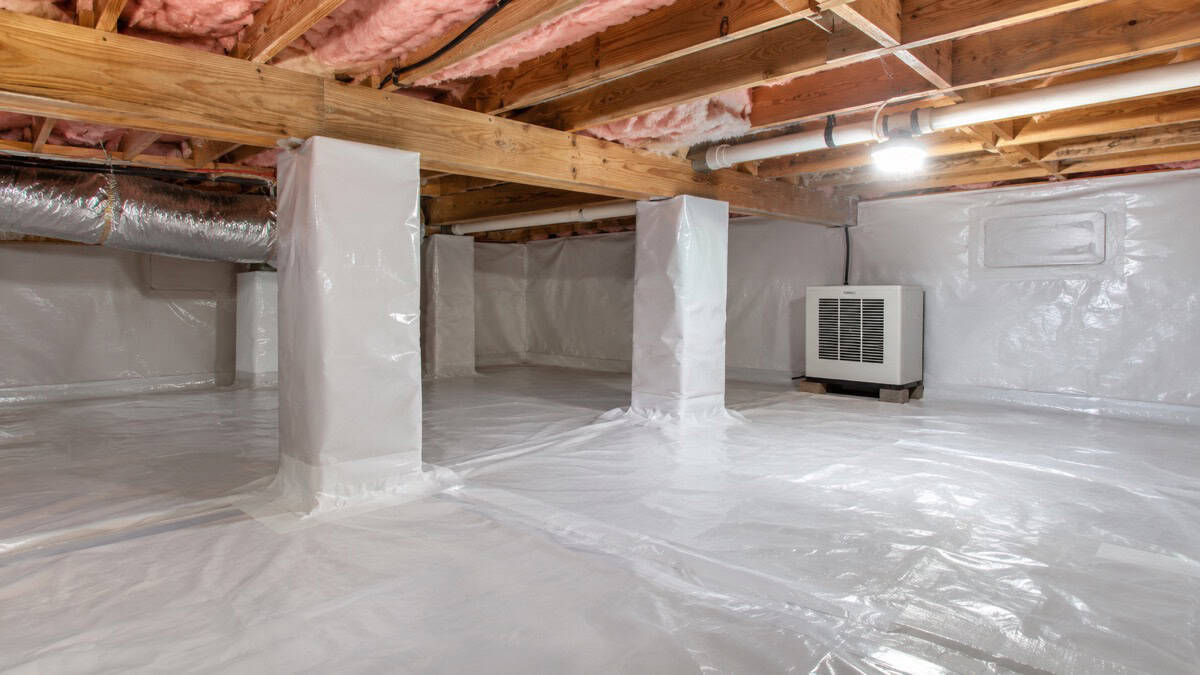
Encapsulation turns a damp, open crawl space into a sealed, controlled one. A complete job usually includes:
- A heavy-duty liner covering the ground and running up the foundation walls, with sealed seams
- Sealed vents and openings, so humid outdoor air stops flowing in
- A sealed, insulated access door
- Moisture control, usually a dehumidifier sized for the space
- Drainage, such as a sump pump or interior drain, when water is present
The goal is simple: keep ground moisture and humid outdoor air out of the space under your home.
Does crawl space encapsulation actually work?
It does, as long as the crawl space is prepared properly and the system is complete. Research on closed crawl spaces in the Southeast has shown lower humidity and drier framing than in traditional vented crawl spaces.
“Before, you open the access door and it hits you. Damp air, that earthy smell, sometimes beads of water on the ductwork and insulation hanging down. The floor joists read high on a moisture meter. After a good encapsulation, the space is dry and clean, and you can actually see the condition of the wood. What homeowners notice upstairs is that the musty smell goes away, the floors feel less cold and clammy in winter, and the house just feels less sticky in summer. Those are the changes people tell us about on the follow-up visit.”
Tim Rodgers, Region 2 Area Technical Leader, Sawyer Exterminating
What it reliably does
- Lowers humidity in the crawl space
- Keeps ground moisture from evaporating into the space
- Reduces musty odors that can travel into living areas
- Helps protect wood framing from moisture damage and decay
- Makes the space less attractive to moisture-loving pests
What it does not fix
Encapsulation manages moisture. It does not repair structural damage, correct grading, or replace failing plumbing.
“A lot of people expect encapsulation to fix things it was never designed to fix. It won’t level a sagging floor or repair rotted joists. It won’t stop water if your gutters dump next to the foundation. And it won’t cut your power bill in half. Some homeowners also think a liner means they never have to look under the house again. You still need regular inspections. Encapsulation is a moisture control system, and it works best when everyone understands that going in.”
Tim Rodgers, Region 2 Area Technical Leader, Sawyer Exterminating
What is the difference between a vapor barrier and encapsulation?
A vapor barrier is plastic sheeting laid over the dirt floor. Encapsulation is a full system that seals the floor, walls, vents, and access door, and it usually adds a dehumidifier. For more on basic barriers, see our guide to crawl space moisture barriers.
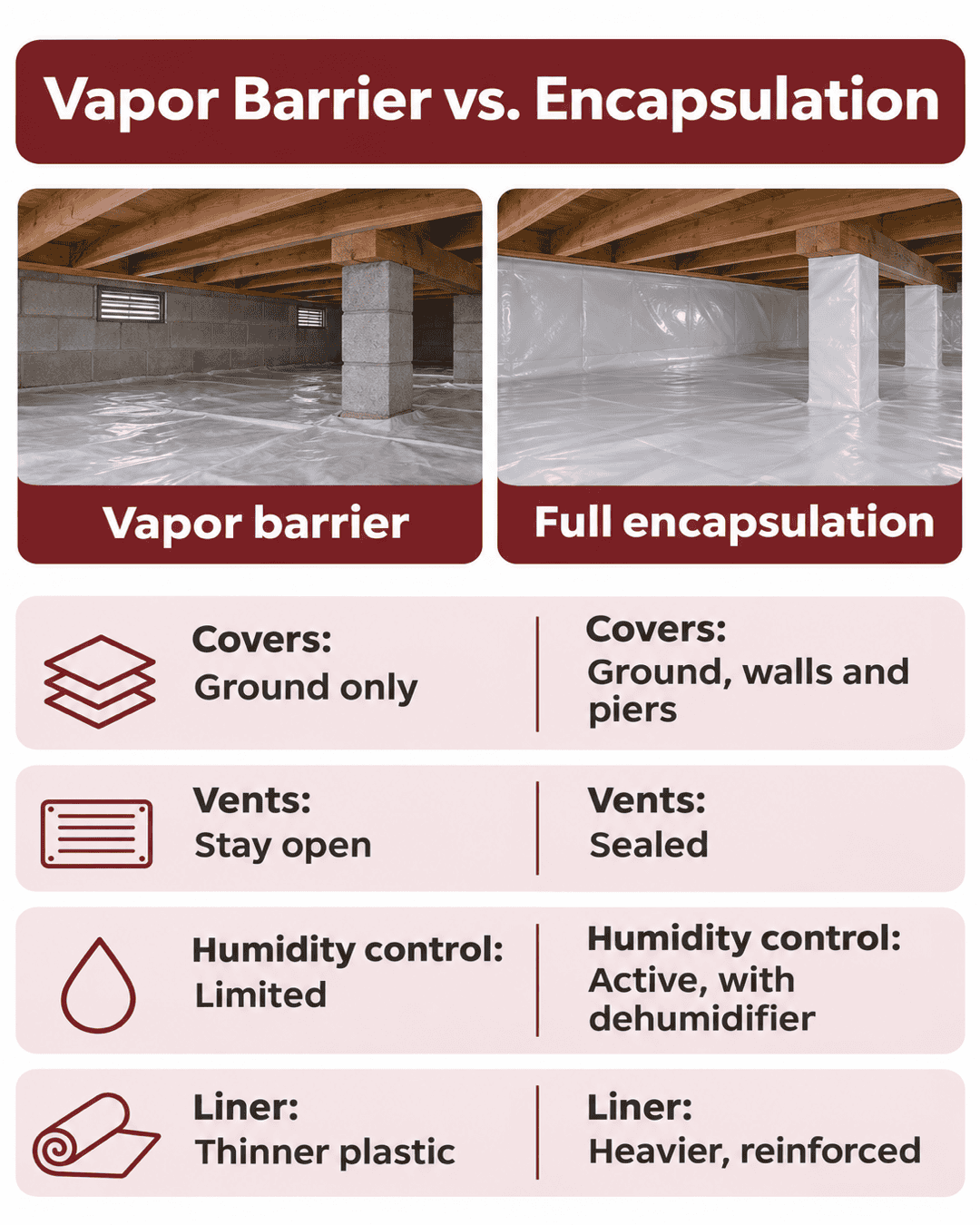
| Feature | Vapor barrier | Full encapsulation |
|---|---|---|
| What it covers | Ground only | Ground, foundation walls, and piers, with sealed seams |
| Vents | Stay open | Sealed |
| Humidity control | Limited | Active, usually with a dehumidifier |
| Typical liner | Thinner plastic, often 6 mil | Heavier, reinforced liner, often 10 to 20 mil |
| Pest deterrence | Minimal | Stronger when paired with sealing and exclusion |
| Typical cost* | Varies by home and scope; estimated after assessment | Varies by home and scope; estimated after assessment |
| Best for | Mostly dry crawl spaces with low humidity | Humid crawl spaces, musty odors, condensation, or moisture damage |
*Pricing varies by home and scope. We provide a project-specific estimate after an inspection. Liner thickness is measured in mils; one mil equals one-thousandth of an inch.
A ground vapor retarder is generally better than exposed soil, but it does not control every moisture source. In humid climates, outdoor air entering through open vents can also add moisture. Whether a ground liner alone is enough depends on conditions in your specific crawl space.
Does encapsulation lower energy bills?
It can, but results vary from home to home. When the crawl space is drier and sealed, your HVAC system may have less humidity to manage. Energy loss through ductwork may also decrease, depending on the ducts’ insulation and condition. Some homeowners notice warmer floors and more even comfort.
How much you save depends on your home’s size, insulation, duct condition, and HVAC system. We are not going to promise a set percentage. Any company that guarantees a specific number without seeing your home is guessing.
Key takeaway: Expect better comfort first. Lower bills are possible, not guaranteed.
Does encapsulation stop mold and moisture?
Encapsulation can reduce the conditions that support mold by limiting ground moisture and managing humidity. It does not guarantee mold prevention, and hitting a relative humidity target alone cannot rule out damp materials or water intrusion.
Encapsulation also does not remove existing mold. Any active growth should be addressed, and bulk water (standing or flowing water) should be managed, before a liner is installed. Clay-heavy soil in parts of the Piedmont may drain slowly, depending on the site, and poor grading can allow water to collect beneath a home after heavy rain.
Does encapsulation keep pests and snakes out?
It helps, and the reason comes back to moisture. Damp crawl spaces can support moisture-seeking pests such as camel crickets, silverfish, and millipedes. Reducing moisture may make the area less favorable to some pests, but it does not guarantee that rodents or snakes will stay out.
How much does crawl space encapsulation cost in North Carolina?
Crawl space encapsulation is priced based on your home and the work required. Square footage, moisture conditions, access, drainage, removal of damaged materials, and repairs can all affect the estimate. A technician can assess the space and provide a project-specific quote.
“Two homes can be the same size and one job costs twice the other. The biggest factor is water. If there’s standing water, you’re adding drainage and a sump before anything else. Second is what has to come out and be repaired first, like wet insulation, debris, or damaged wood. Third is access and layout. A low, tight crawl space with lots of piers and ductwork takes much more time and material than a tall, open one. The liner is often the smallest part of the difference.”
Tim Rodgers, Region 2 Area Technical Leader, Sawyer Exterminating
Common add-ons include:
- Dehumidifier: Quoted separately based on the equipment and installation required
- Sump pump or interior drainage: Quoted separately based on site conditions and scope
- Removal of old insulation and debris: Varies with crawl space size and condition
- Wall insulation and vent sealing: Varies with layout
- Wood repair or structural work: Quoted separately after inspection
Wondering whether your crawl space is a good fit? A trained technician can check moisture levels, drainage, and framing, then give you an honest recommendation, even if that means telling you encapsulation is not your next step. Learn more about our crawl space encapsulation services, or request an assessment to discuss the work and your estimate.
How long does encapsulation last?
A liner’s service life depends on its material, installation, foot traffic, and maintenance. Dehumidifiers and sump pumps are mechanical components and may need service or replacement sooner. Check the specific product warranty and manufacturer guidance for expected service life.
Regular checkups help the system last. Your technician can look for torn seams, water intrusion, and equipment problems before they grow.
When is encapsulation not the right answer?
Many guides skip this part. Encapsulation is not always the right first step, and sometimes it is not needed at all.
“I’d hold off on encapsulating a crawl space with standing water every time it rains. I saw one in Alamance County recently where the downspouts emptied right at the foundation and the yard sloped toward the house. Sealing that space would have trapped water under a liner. The right order was to fix the gutters and grading, add drainage, and dry everything out. The same goes for active plumbing leaks, rotted joists, or termite damage. Fix those first. Encapsulation protects a healthy crawl space. It can’t make an unhealthy one healthy.”
Tim Rodgers, Region 2 Area Technical Leader, Sawyer Exterminating
Encapsulation may be premature or unnecessary when:
- Water is actively getting in, and drainage or grading has not been corrected.
- Plumbing leaks are still present.
- Structural damage needs repair first.
- Active termites or wood rot have not been treated.
- The crawl space is already dry, with low humidity and no signs of moisture. A ground vapor retarder may be sufficient, depending on site conditions. Ventilation choices should account for local humidity and code requirements.
- You plan to sell soon, and the space has no real moisture problem.
Key takeaway: Fix water, leaks, and damage first. Then encapsulate a crawl space that is ready for it.
How to tell if your crawl space needs it
Watch for these signs:
- A musty or earthy smell in the house, especially in summer
- Cold, damp, or soft floors
- Condensation on ducts, pipes, or framing
- Sagging or fallen insulation
- Visible mold or mildew on wood
- Frequent camel crickets, spiders, or rodents
- High indoor humidity, even with the AC running
Request a free crawl space inspection or call Sawyer Exterminating to talk through moisture, pests, and whether encapsulation is the right next step.
Prefer to talk to someone? Call (336) 226-1448.
Frequently asked questions
Does crawl space encapsulation actually work?
Yes, when the crawl space is properly sealed, drained, and dehumidified. It reliably controls moisture and humidity. It does not work if standing water, plumbing leaks, or structural problems are not fixed first.
Does crawl space encapsulation lower energy bills?
It can. A dry, sealed crawl space may reduce the load on your HVAC system and improve floor comfort. Savings vary by home, insulation, and duct condition, so no specific percentage can be guaranteed.
How much does crawl space encapsulation cost?
There is no single price for crawl space encapsulation. The estimate depends on the crawl space size, moisture and drainage conditions, access, and any cleanup or repairs needed. A technician can assess your home and provide a project-specific quote.
What is the difference between a vapor barrier and full encapsulation?
A vapor barrier is plastic sheeting over the ground only. Full encapsulation seals the ground, walls, vents, and access door, and it usually adds a dehumidifier to actively control humidity.
Does encapsulation keep pests out of a crawl space?
It can reduce the moisture that attracts some pests and may close certain entry points, but it does not guarantee exclusion. Openings should be sealed and pest activity addressed separately.
How long does crawl space encapsulation last?
A liner’s lifespan depends on its material, installation, use, and maintenance. Dehumidifiers and sump pumps may need service or replacement sooner. Check the product warranty and manufacturer guidance for expected service life.
About the contributors
Author: Tim Rodgers, Region 2 Area Technical Leader, Sawyer Exterminating
Tim Rodgers serves as Region 2 Area Technical Leader, Sawyer Exterminating. With extensive field experience and technical expertise, he supports teammates through training, coaching, and problem-solving guidance. Tim is dedicated to helping teams provide effective pest management solutions and extraordinary service for customers throughout the region.
Reviewed by: Cory Goeltzenleuchter, B.C.E., P.H.E., Director of Technical Services, Sawyer Exterminating
Cory Goeltzenleuchter, B.C.E., P.H.E., is the Director of Technical Services for Sawyer Exterminating. As a Board Certified Entomologist and Public Health Entomologist, Cory is one of the organization’s leading technical experts in pest management. He oversees technical training, service standards, and industry best practices while helping ensure customers receive extraordinary service through science-based solutions, ongoing education, and innovative approaches across Sawyer Exterminating.